
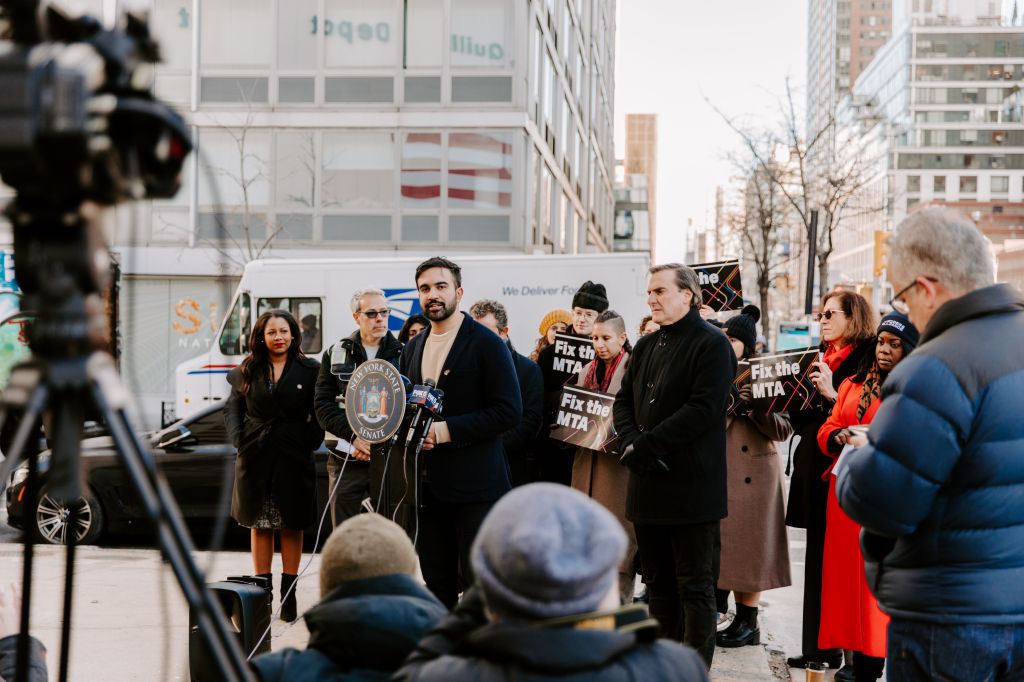
Young voters and social media fuel Astoria Assemblyman’s victory over Andrew Cuomo and Curtis Sliwa, exposing deep borough divides and generational shifts
Zohran Mamdani’s historic win in the 2025 New York City mayoral election marked an ideological shift in the city’s political landscape, mostly fueled by generational differences, putting a spotlight on the “forgotten borough,” Staten Island, versus the other four.
The 33-year-old Astoria Assemblyman, who ran on a progressive platform emphasizing housing affordability and economic justice, defeated both former New York Governor Andrew Cuomo and Guardian Angels founder Curtis Sliwa in a decisive victory that reflected deep changes in voter priorities and participation across the five boroughs.
How Staten Island Voted
While Mamdani’s campaign resonated across much of NYC, Staten Island once again stood apart. Long recognized as the city’s most conservative borough, preliminary election sentiment shows Staten Island voters favored Sliwa, but Cuomo mathematically presented a more optimal voting scenario with the Republican primary candidate trailing in the reported polls.
The contrast emphasizes widening political and demographic divides between Staten Island and the rest of New York City.
How NYC Voted
According to The Times, key and relevant statistics include: a majority of the electorate younger than 45-years old opted for Mamdani instead of Cuomo, who ran as an independent, and turnout – approximately 2.06 million people – was 79% higher than 2021.
Below New York Times Visual Investigations reporter Christiaan Triebert lays out additional information providing turnout difference on a hyper-local, neighborhood level.
Mamdani’s campaign also harnessed the enthusiasm of a younger, digitally active voting base that turned out in record numbers across the city. According to ABC News, his message resonated most strongly with the aforementioned voters under 35 [and 45 referenced above], first-time participants, and residents who had lived in New York City for roughly a decade or less; groups drawn to his emphasis on affordability, transit access and inclusive governance.
As Mamdani’s win relates to affordability, according to analysis from The City, mayor-elect Zohran Mamdani secured a majority of the vote in 51 percent of election districts where the median household income falls below the citywide median. On social media, his victory speech which noted economic strife, spread quickly across X, Instagram, and TikTok. The speech reflected a wave of civic energy mirroring the same communities driving engagement online.
Impact of Mamdani’s Win Moving Forward
By contrast, data from the New York City Board of Elections shows that Staten Island lagged behind other boroughs in turnout among first-time and younger voters, continuing its trend as the city’s most suburban and politically spread-out conservative area overall. While Manhattan and Brooklyn saw robust participation from newer and younger residents, Staten Island’s older electorate was less responsive to Mamdani’s progressive messaging.
John Catsimatidis, a Greek immigrant who arrived in New York City as a baby in 1948, built a retail empire as owner, president, chairman and CEO of iconic NYC grocery chains like Gristedes and D’Agostino, remains a prominent businessman and Republican figure in the city. Catsimatidis responded to data published in the Staten Island Advance from the mayoral election showing Staten Islanders, skewing older, overwhelmingly leaned Cuomo even over Sliwa.
The split emphasizes how social media enthusiasm can align, or collide, with long-standing demographic and geographic divides within New York City politics.
As the first Muslim and South Asian elected to lead New York City, Mamdani’s cultural identity helped amplify the popularity of the below example viral Instagram clip featuring content creator Nicolas Nuvan munching on Rajnigandha because it offered a playful, authentic cultural nod that resonated deeply across immigrant and South Asian digital communities.
Still, Mamdani’s win holds implications even for areas that didn’t support him.
In practical terms, repairing relations with blocs of the city wary of his leadership could require the devotion of significant political capital, energy that could otherwise go toward delivering on his main policy planks. These challenges may be particularly visible in Staten Island, where a large portion of residents are employed in law enforcement, firefighting, and other city agencies that have historically leaned more conservative in their voting patterns.
Mamdani may also encounter difficulties strengthening relationships with portions of New York’s Jewish community, given the sensitivity surrounding past policy positions and remarks. Plenty of local leaders, Democrats and Republicans, including Council member Kamillah Hanks and Assembly member Charles Fall of Staten Island, who vocally supported Cuomo, offer potential resistance to the mayor-elect once his term begins in 2026.
Addressing these dynamics will be essential to establishing consensus and ensuring effective governance across a politically and demographically diverse city.
Mamdani’s campaign’s reliance on grassroots organizing, small-dollar donations, and viral content could serve as a model for future local candidates hoping to connect across borough lines. In interviews after his victory, Mamdani emphasized unity and representation for “all New Yorkers – from “The Bronx to Staten Island,” signaling a desire to bridge divides that have long defined city politics.
Final Takeaways in 2025 NYC Mayoral Race
The 2025 mayoral election illustrates the evolving nature of voter engagement in the social media era, too. Algorithms, neighborhood identities, and generational attitudes all converge on Election Day, despite the fact a fraction of New York City’s estimated 8.48 million people as of July 2024 choose to take part in the early voter process and Election Day. For Staten Island, the results offer a reflection of where the borough stands in a rapidly changing New York City.
The complete unofficial Election Night results for the November 4, 2025, General Election, including borough-by-borough breakdowns and Assembly District details, are available directly here on the New York City Board of Elections website.
All official data cited here was cross-checked against the New York City Board of Elections and reporting from The City. Social-media posts provided were directly via verified X/Twitter and Instagram accounts. No outreach was made to Mamdani campaign representatives regarding his outreach or community-relations efforts. Questions or requests for additional information and resources, including about community-relations issues involving the city’s Jewish community and other previous allegations, may be directed to Mamdani’s publicly listed office at 24-08 32nd Street, Suite 1002A, Astoria, NY 11102 or via email at mamdaniz@nyassembly.gov.
 Who's Next?
Leave a comment