
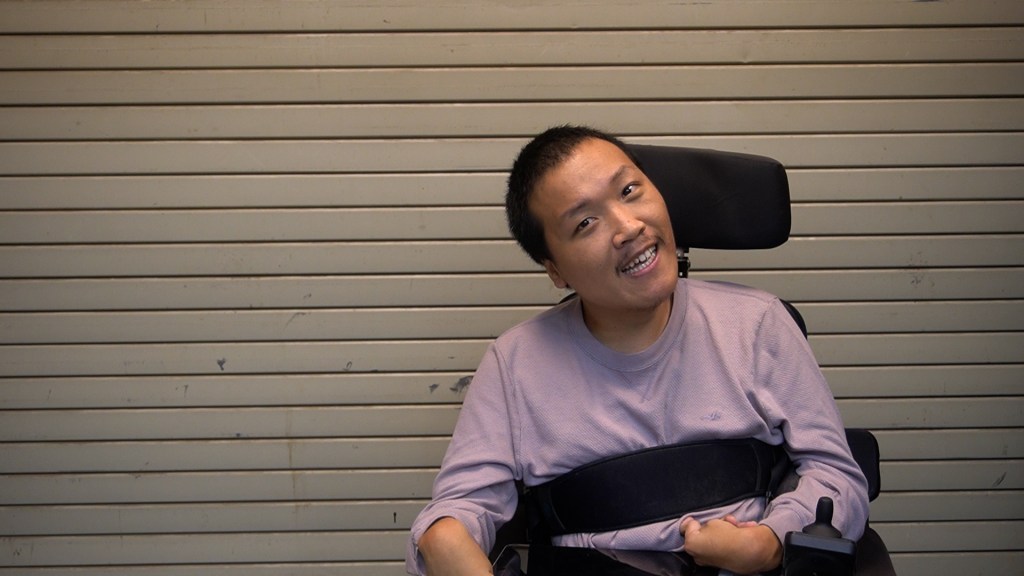
Jacky Zhao advocates beyond physical limitations with commute, involvement on campus and open communication about being born with the neurological disorder
At the College of Staten Island (CSI), 30-year-old commuter student, senior Jacky Zhao, represents determination, advocacy, and perseverance. Born with Cerebral Palsy (CP), a group of neurological disorders that affect movement, coordination, and muscle tone, Zhao, in his own words, would tell you that he has never let his condition define him.
Instead, Zhao is regularly seen channeling his energy into student life, involvement – appearances at academics and athletics events – and inspiring others across campus. Zhao is enamored with forensic science, working on a degree in Psychology and Biochemistry and Molecular Biology (BMB) and preparing to graduate in the spring. From there, John Jay College of Criminal Justice, a City University of New York (CUNY) institution to pursue a master’s degree.
The term “Cerebral Palsy” originates from “cerebral,” meaning related to the brain, and “palsy,” indicating muscle weakness or movement issues because of brain damage affecting motor control. The Cerebral Palsy Foundation website has an abundance of information and resources on how to better understand the key differences between Hemiplegia, Diplegia and Quadriplegia highlighted by the below infographic.
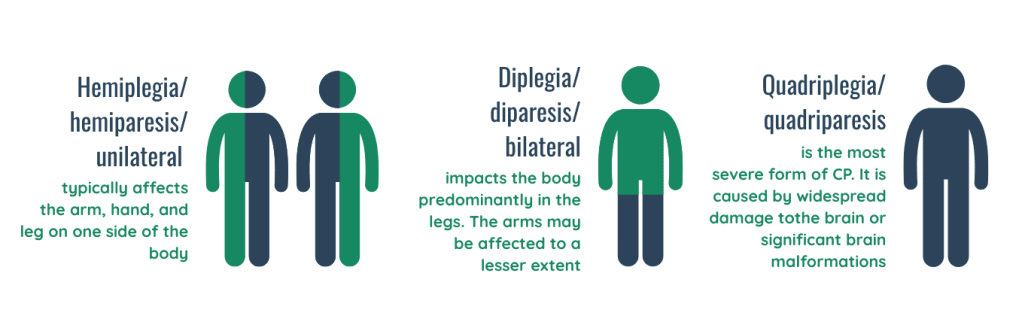
- Hemiplegia affects one side of the body from the arm to the hand to the leg.
- Diplegia primarily impacts the legs with lesser arm involvement.
- Quadriplegia, the most severe, affects all four limbs due to widespread brain damage.
These distinctions reflect the extent and location of brain injury influencing muscle function.
Zhao is a quadriplegic who commutes from Brooklyn to CSI several times a week primarily with Access-A-Ride, a paratransit service for eligible customers with disabilities in New York and Connecticut provided by the Metropolitan Transportation Authority (MTA), North America’s largest transportation network. The process of commuting poses additional hurdles for Zhao.
“It’s good, but not good in a sense,” Zhao said laughing. “They’re always late… sometimes I miss class or meetings. DMT [MTA] needs to do better with their system.”
According to the Centers for Disease Control and Prevention (CDC), approximately one in every 345 children in the United States is identified with Cerebral Palsy. The condition affects nearly one million people nationwide, according to the Cerebral Palsy Guide. Its range of severity varies widely – some require full-time assistance while others are able to utilize proper motor functions such as walking independently. Every individual experience is unique and deeply personal.
Additional prevalent Cerebral Palsy data and statistics can be found on the CDC website.
JAG Physical Therapy is one of the fastest growing comprehensive physical and occupational therapy practices in New York, New Jersey and Pennsylvania. The private company has a total of 160 different locations, 10 across Staten Island.
Michael Lattanzio is the Clinical Director of the JAG Physical Therapy location in the Eltingville neighborhood of Staten Island. Lattanzio, a Staten Island native, graduated from the College of Staten Island physical therapy program by obtaining his master’s degree in 2005; months later, he was officially licensed in August of the same year.
Lattanzio has worked with a wide range of patients, including individuals like Zhao born with Cerebral Palsy.
“If someone comes in here and they’ve been, unfortunately, wheelchair-bound since birth, and they never have walked, the chances of getting them to walk or do any kind of high-level mobility goals, really, that potential isn’t going to be there,” Lattanzio said.
Lattanzio explains how the JAG staff further evaluates and assesses individual needs.
“We would more work on postural awareness. We have to assess what kind of active range of motion they may have out of their arms, if they can stand at all. It would definitely be on a case-to-case basis, but obviously, you kind of know off the bat where you’re going with the patient and where their potential is going to be based on what they’ve been able to do in the past.”
In addition to the Cerebral Palsy Foundation, United Cerebral Palsy (UCP) and Cerebral Palsy Alliance Research Foundation (CPARF) are two other organizations dedicated to the cause. The organizations specifically fund clinical and targeted research dedicated to medical advancements, potential breakthroughs and overall improving quality of life in ways such as early diagnosis, prevention, treatment, and regenerative remedies.
Daily life brings both challenges and victories for Zhao, who constantly remains active. He chooses to remain open about discussing Cerebral Palsy in depth during conversation.
“I don’t think my disability defines me at all because I do a lot of things,” Zhao said. “I get involved a lot with CSI.”
Zhao is an advocate for extending and improving accessibility on the CSI campus. He continues to candidly speak up, ensuring that future students with disabilities benefit from better services.
“They [CSI] always talk about [having an] accessible campus, but they don’t always have the right services for people with disabilities,” Zhao explained. “One thing that they can provide more support with is when people need note-taking services. Right now, they’re having me on this note-taking app.”
World Cerebral Palsy Day is recognized on October 6, and Zhao’s story is a reminder for the CSI community and community at large that progress begins with awareness. Despite potential health-related setbacks, Zhao remains an advocate of positive and personable. His outlook and message resonate with and extends beyond the disabled community.
“Don’t be afraid to put yourself out there,” Zhao advised. He added: “Your disability doesn’t define you. Always stay positive and always ask for help.”
 Who's Next?
Leave a comment